


Does boiling water purify it? And other things you should know about water filtration
Health | 25-08-26

For specifiers, facilities managers, architects, office managers, and fit-out teams, the question isn't just whether water is safe to drink. It's also whether the system chosen can consistently deliver better-tasting drinking water, reduce contaminants, and support long-term performance in busy commercial settings.
In this blog, all this and more, including the difference between boiling, filtered, and purified water, and the best way to remove common contaminants from your water supply.
Does boiling water purify it?
Boiling water can make water safer to drink in emergency situations by killing bacteria, viruses, parasites, and other harmful microorganisms. Clear water should usually be brought to a rolling boil for at least one minute. This is because boiling temperatures can help kill germs that may cause illness.
A water filter is designed to reduce selected contaminants before the water is dispensed or consumed. Depending on the system, filtering tap water can help improve taste, reduce unwanted impurities, and support a more consistent drinking water experience.
Although filtered water and purified water are sometimes talked about as if they're the same, they're not.
-
Filtered water. Filtered water is passed through a filtration system designed to reduce specific contaminants. However, different water filtration systems are able to target different impurities, which is why it's important to understand what the tap or system you specify can achieve.
-
Purified water. Purified water, on the other hand, has usually been processed more extensively to remove a wider range of substances. Some water purification systems, including reverse osmosis systems, are designed to strip out as much as possible from the water. This can be useful in certain settings, but it can also remove naturally occurring, healthy minerals like calcium and magnesium.
The hidden benefits of filtered water
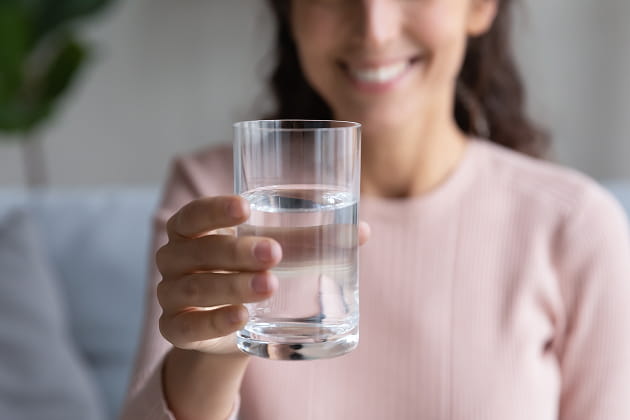
It's worth noting that better water is not necessarily water that has had everything removed. Minerals can contribute to taste and are part of what makes drinking water feel fresh and balanced.
This is one of the reasons why, at Zip, we focus on filtration rather than purification. Our approach isn't about stripping everything out; it's about reducing the contaminants you don't want, while retaining the beneficial minerals you do.
For workplaces and commercial spaces, that balance is important. Filtered water can provide a better drinking experience without the drawbacks of systems that remove minerals unnecessarily. It can, in turn, support hydration by improving taste and helping people feel more confident in the water available to them throughout the day, not to mention giving them essential minerals for everyday health.
What does Zip’s 8-in-1 filtration reduce?
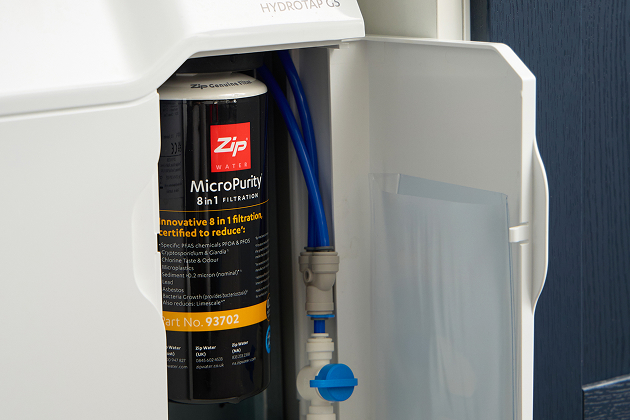
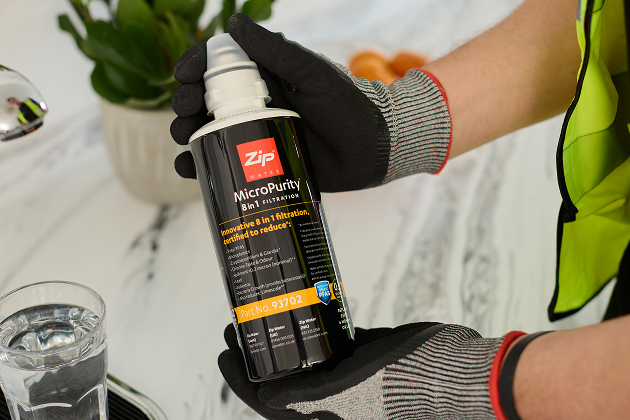
Zip’s market-leading 8-in-1 MicroPurity™ filtration is independently certified to reduce the 8 most harmful contaminants in drinking water. It has been specially designed to support workplaces and commercial environments by improving taste, reducing selected contaminants, and helping protect system performance.
1. PFAS
PFAS, often referred to as “forever chemicals” because of their persistence in the environment, have become a growing focus in conversations about water quality.
Zip’s MicroPurity™ filtration is independently certified to reduce PFAS in drinking water, helping provide greater confidence in everyday hydration. Our genuine MicroPurity™ filters are certified to NSF standard 42 (Aesthetic Effects) and 53 (Health Effects) to ensure they meet the highest standards.*
*Zip MicroPurity™ filter sizes 1 and 1.5 (93701, 93702) are certified to NSF/ANSI Standard 53 to reduce 99.4% of total PFAS (average reduction).
2. Microplastics
Microplastics are tiny plastic particles that can enter water sources through a range of environmental pathways. Because they're not removed by boiling tap water, filtration has an important role to play.
3. Lead
Lead can enter drinking water through older pipework and plumbing materials. A suitable, certified filter is needed to reduce it.
For commercial buildings and workplaces, particularly those with older infrastructure, this is an important consideration for water quality planning.
4. Asbestos
Asbestos is usually associated with building materials, but asbestos fibres can also be a concern in some water infrastructure contexts. Zip’s MicroPurity™ filtration is certified to reduce asbestos, helping support a more robust approach to drinking water quality in commercial settings.
5. Sediment
Sediment includes suspended particles that may affect the appearance, taste, or clarity of drinking water. Because Zip filtration acts on particles down to 0.2 microns in size, it helps to deliver cleaner water and support the long-term performance of drinking water systems.
6. Bacteria and cysts
Boiling water can help kill some bacteria, but filtration plays an important role in reducing harmful biological contaminants. Zip’s 8-in-1 filtration is certified to reduce bacteria and cysts, including microorganisms such as Cryptosporidium and Giardia.
7. Chlorine taste and odour
Chlorine is used in the water treatment process to help maintain a safe water supply. However, it can negatively affect the taste and smell of tap water. Reducing chlorine taste and odour can make drinking water more appealing, which matters when hydration depends on people actually wanting to drink the water provided.
8. Limescale
In hard water areas, limescale can affect both water taste and system performance. Zip’s filtration helps reduce limescale, while the addition of a Zip limescale prevention filter further safeguards the system, improving performance and longevity.
Choose market-leading water filtration solutions from Zip Water
While boiling water can help in specific situations, it does not remove many harmful contaminants, and it's not the same as filtration. Purification is not always the goal either: some water purification systems remove almost everything from water, including beneficial minerals such as calcium and magnesium.
That's why our market-leading filtration is designed to reduce the contaminants you don't want, while retaining the minerals you do. For commercial environments, that means better-tasting drinking water, greater confidence for users and a more practical way to support hydration across the workplace.
Discover Zip Water’s advanced filtration solutions and find out how we can help you deliver cleaner, fresher-tasting water for your next workplace, fit-out, or commercial project by getting in touch.
FAQs
Is filtering tap water better than boiling it?
It depends on what you're trying to achieve. If there is a boil water advisory, then boiling water can be an important emergency measure. It's a simple and effective way to help kill bacteria, viruses, and parasites when advised by the relevant authorities.
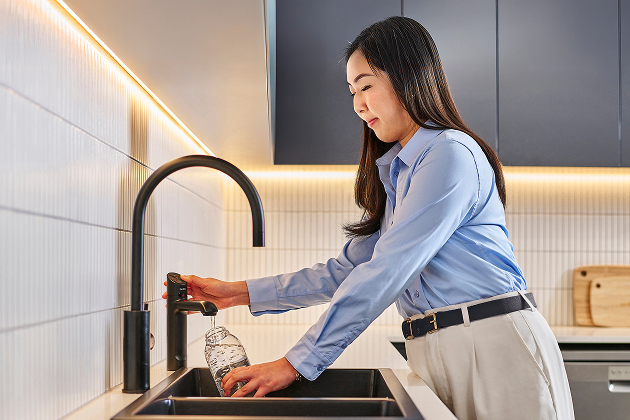
But for everyday drinking water in commercial environments, a filtered water tap is the better solution. A filtered water tap can reduce selected contaminants before the water is dispensed, helping improve taste and supporting a better experience for users. It can also support sustainability goals. When people have access to great-tasting filtered water, they are more likely to refill and less likely to rely on bottled water or single-use, sugary drinks.
Can boiling water remove chemicals?
No. Boiling water does not reliably remove chemicals from tap water. While heat can help kill bacteria and some harmful microorganisms, many chemicals, industrial chemicals, heavy metals, and inorganic compounds remain in the water after boiling.
In some cases, as water evaporates, contaminants that are not removed by heat may become more concentrated. That is why a certified water filter is a better choice for reducing specific contaminants in everyday drinking water.
Can boiling water remove minerals?
No. Boiling water does not remove minerals such as calcium and magnesium. These minerals remain in the water, even when it reaches boiling point.
This matters because not all minerals are unwanted. Zip Water filters rather than purifies because filtration can reduce harmful contaminants while retaining beneficial minerals that contribute to health and taste.
Is boiling water a disinfection process?
Yes. Boiling water is mainly a disinfection process. Heating water to boiling temperatures can effectively kill bacteria, viruses, parasites and other pathogenic microbes, which is why boiling is recommended during some emergency situations.
However, disinfection is not the same as filtration. Boiling water can help with biological contaminants, but it does not remove many other contaminants that can affect water quality, taste, or confidence.
Is reverse osmosis the same as water filtration?
Reverse osmosis is a type of water purification process. It pushes water through a semi-permeable membrane to reduce a wide range of contaminants.
However, some reverse osmosis water purification systems remove important minerals such as calcium and magnesium. Zip Water’s approach is different: our advanced filtration is designed to reduce selected contaminants while retaining beneficial minerals.
Is filtered tap water better than bottled water?
For many commercial environments, filtered tap water can be a more practical and sustainable alternative to bottled water. It gives employees, visitors, and building users access to better-tasting water without relying on single-use plastic bottles.
A certified filter can also help reduce selected contaminants, improve taste, and support user confidence in the water available on site.
Why does chlorine affect the taste of tap water?
Chlorine is commonly used in the water treatment process to help maintain a safe water supply. While it plays an important role, it can sometimes affect the taste and odour of tap water.
A suitable filter can help reduce chlorine taste and odour, making tap water more appealing to drink. In workplaces and commercial environments, that matters because taste can influence how often people choose water.
Does boiling water eliminate bacteria?
Yes, boiling water eliminates bacteria and can also help kill other organisms, including some viruses and parasites. That is why boiling is often recommended when water may be unsafe or when there is a problem with the local water supply.
However, boiling water is mainly useful for biological risks. It does not remove chemicals, heavy metals, PFAS, microplastics, or other contaminants that can affect water quality and human health.
Can boiling water make contaminated water safe to drink?
Boiling water can help make contaminated water safer to drink if the concern is bacteria, viruses or other organisms. The water must be heated properly and brought to a rolling boil using a reliable heat source.
But boiling is not a complete solution. If contaminated water contains chemicals, heavy metals, fuel, PFAS, or other inorganic substances, boiling will not remove them and may not make the water safe to drink.
What is the best way to achieve the highest quality drinking water?
For everyday use, the highest quality drinking water is usually achieved through a suitable filtration system, rather than boiling alone. Boiling can help in emergency situations, but filtration is designed to reduce specific contaminants that boiling cannot remove.
Zip Water’s approach is to filter rather than purify, reducing unwanted contaminants while retaining beneficial minerals that support taste and hydration.