


How to Reduce Water Usage in the Workplace
Workplace | 01-04-24

With rising energy costs and water bills putting pressure on budgets, many are looking for ways to save water in the office.
Bills are soaring, and every effort your business can make to save water in the office can help you save on costs.
But beyond the financial aspect of conserving water, we should all be taking extra care to reduce our water usage due to its negative impact on the planet.
5 easy ways to save water
Here we’ll cover 5 quick, easy ways you can save water in the office, before moving on to explore the 8 key ways that businesses can take further action to conserve this precious resource.
-
Schedule a quick inspection. Take a walk around your premises and note down any taps or toilets that are leaking; after this, you’ll know if you need to bring in a plumber urgently.
-
Place a washing-up bowl in the workplace kitchen sink to reduce the amount of hot water required for washing up.
-
Encourage employees to reuse water bottles and refill them. Signs placed by drinking water taps can help to remind people to only fill their bottle with what they need to reduce waste.
-
Run the dishwasher only when full. Creating a sign for the dishwasher asking for it to be turned on only when full will help employees remember this tip.
-
Recycle rainwater for watering office plants. If you have a small outside area, place a bucket or other container outside on rainy days to collect rainwater for caring for indoor plants.
Read on to discover more about the benefits of water conservation, and to explore 8 important ways to reduce water usage at work.
Benefits of water conservation at work
UK businesses used over 221 million litres of water a day in 2025. Whether your own priorities are linked to financial or sustainability benefits, saving water at work helps to improve both.
These are just a handful of the many benefits of conserving water at work:
-
It saves money on the water bill.
-
It helps your business meet Environmental, Social, and Governance (ESG) guidelines.
-
It places less pressure on water services and infrastructure in the UK. If restrictions are put in place due to a drought, you will be adept at dealing with them.
-
Your business will be reducing its impact on the planet.
-
Only 0.5% of water on Earth is suitable for drinking. With such scarcity, it's important to conserve water whenever possible.
Ways to reduce water consumption in the workplace
For businesses, water use is a cost that may seem unavoidable, and a bill that is allowed to climb without much notice. While the water bill will never whittle down to nothing, there are several ways businesses can reduce water consumption at work:
1. Monitor water usage
Keeping an eye on your business’ water usage will help you reduce water consumption in the office long-term, as you will be able to analyse where and when water is being used.
Water management in the office starts with understanding where water is being wasted; installing a smart water meter allows you to see exactly how much water your business is using, and it’s an excellent tool for helping with general energy management.
2. Carry out maintenance and check for leaks
Over 3 million litres of water are lost to leaks every single day in England and Wales.
To help conserve water and save on costs for your business, you should arrange to have your plumbing system routinely checked for leaks and regularly conduct general maintenance.
Even if your business is meticulous in its dedication to reducing water usage, having a leak in the water supply can leave you with a significant bill and no obvious source. Employing the services of a plumber to check the pipework is a worthwhile investment for long-term savings for businesses.
3. Only use appliances when necessary (such as a full dishwasher)
Careful management of appliance use in the office will help your business save money on two fronts – water and electricity. Energy costs from appliance use can quickly add up to hundreds or even thousands of pounds over 12 months.
The cost of using appliances like a dishwasher or kettle can be reduced when they are used efficiently. Filling the kettle with only the amount of water needed and running the dishwasher (and washing machine, if your workplace has one) only when full will help save water, reduce energy usage, and lower your business’s carbon emissions.
Alternatively, solutions such as the Zip HydroTap can help reduce kettle use altogether, while also producing up to 33% fewer carbon emissions than one over the course of a year. Its patented PowerPulseTM technology is designed to heat only the exact amount of water required, helping to minimise wasted energy and avoid constant cycles of heating and cooling.
4. Educate staff
It can be hard to break out of everyday habits, but when it comes to conserving water, it's worth encouraging people to do so.
A few reminders about the impact of excessive water use on the environment, and incorporating it into your business sustainability initiatives, can help employees to consider the effects of their actions.
Place signs near water stations to remind employees of small changes they can make to help with water saving. Here are a few simple things your office can do to reduce water consumption:
-
If your office or place of work has showers, encourage a limit of 4 or 5 minutes.
-
Ask staff to check that taps are turned off properly in bathrooms and kitchens.
-
As mentioned previously, only use the dishwasher when it is full.
-
If using a kettle, fill it only to the level needed.
5. Install a self-closing tap to save water
On a busy day at work, some people may absent-mindedly leave a tap running after they've used it. By installing a self-closing tap (a tap that doesn't need to be turned off, and will do so automatically), you could potentially save on gallons of water wastage.
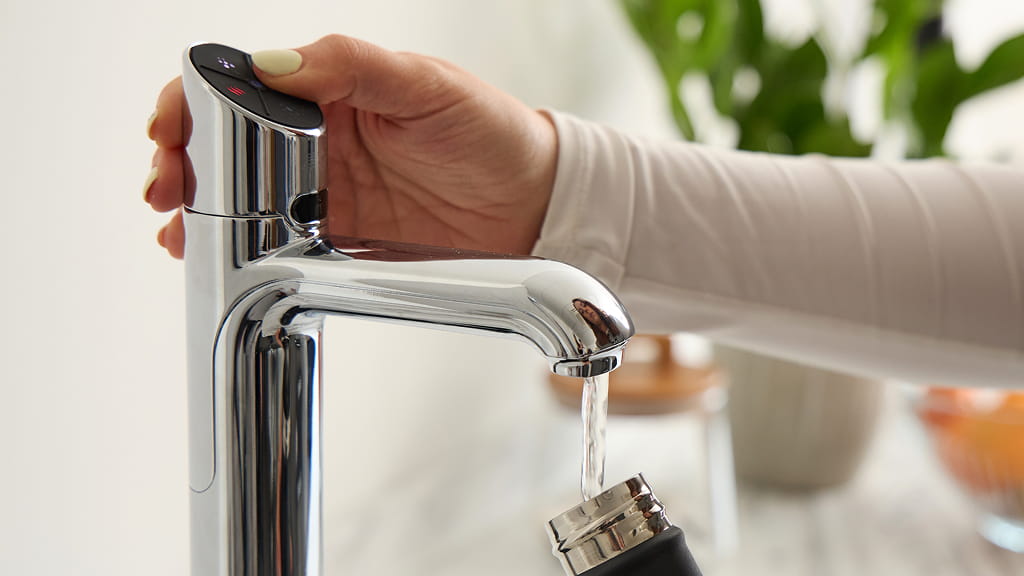
HydroTap is expertly designed to avoid waste. By instantly dispensing filtered boiling, chilled, and sparkling water, employees only use the amount of water they need for a cup of tea or coffee or a refreshing cold drink; as soon as they let go of the touchpad, the water stops. Just like that.
6. Consider other water-efficient products
A water-saving device like a self-closing tap is a great start, but that isn't the only addition that can help you to save water in the office. Other water-saving, environmentally friendly products include water-efficient shower heads, shower timers, and a soil moisture meter.
Have you thought about a rainwater butt?
While not an option for all workplaces, installing a water butt to collect rainwater can be a great environmentally friendly way to save water.
Rainwater is great for plant life. If you have a small garden area, it's an ideal solution for water saving – made even more worthwhile by the fact that rainwater is superior to tap water for plants. Even office buildings in urban areas without an outdoor garden may find it useful for indoor plants, which, after all, are an important requirement for a healthy workplace environment.
Harvested rainwater has more uses than just watering the plants, however, and can be used for everything from cleaning the floors to flushing toilets.
Harvested rainwater can be easily incorporated into an office, becoming an essential part of your workplace's sustainability initiatives and environmental management system. It can be used extensively if connected to the water system, or just for small tasks like plant watering; either way, it is an effective, sustainable way to cut down on costs in the office.
7. Check how efficiently your toilets handle water waste
Install dual flush toilets for better efficiency and less waste
Traditional toilets weren't designed with saving water in mind; old, single flush systems used an average of 13 litres per flush. Dual flush toilets were made to reduce water consumption and typically use around 5 litres per flush.
Toilet flushing is accountable for 43% of the water usage in offices. Though it will be one of the largest sources of water consumption regardless – this isn't advocating against flushing the toilet – you can still save water by swapping your toilet for a more modern model.
Having two options for flushing, so that less water is required for the most frequent uses, can make a big difference in reducing water consumption over the course of a year.
Toilets can develop leaks, from the cistern into the bowl, which are hard to spot. Though they don’t cause any damage to your premises, this kind of malfunction can lead to up to 400 litres of wasted clean water per toilet, per day.
Check your toilets for any water that silently seeps down into the bowl between flushes to ensure this isn’t happening in your office bathroom.
Look at low-flow toilets and waterless urinals
Though uncommon in the UK, high-flow toilets are a big offender when it comes to water usage. If you have one of these toilets in the office, consider switching to a model with better water efficiency, such as a low flow toilet, to conserve water.
If your business has bathrooms with urinals, you could be losing more water than you realise; up to 87,000 litres of water per urinal, per year. Waterless urinals are just as effective, and are an excellent way of reducing water consumption for businesses.
Water-saving methods like these – in the workplace bathroom alone – could potentially save your business hundreds of pounds over a year.
8. Why not look to install HydroTap?
HydroTap can revolutionise the way your business uses water. It is designed to reduce water usage as you only dispense the exact amount of water that you need.
HydroTap also incorporates market-leading technology to ensure that the air-cooled system used to produce filtered chilled water eliminates the use of extra water in the cooling process.
Did you know a kettle produces 73g of carbon dioxide per year? HydroTap produces 66% less carbon per year on average. Add that to the water savings you'll be making, and it's a win-win for businesses.
On top of saving water, installing a Zip HydroTap will save your employees time, help to boost productivity, and improve the sustainability of your business.
You’ll reduce the number of single-use plastic bottles in your workplace, as HydroTap’s advanced filtration system offers a superior taste, eliminating the need for bottled water.
Use our handy HydroTap selector tool to find your perfect workplace drinking water solutions.
Water management at work, made simple
Reducing the amount of water wasted at work is simple, as outlined by these methods, and is best achieved through the education of staff and the adoption and appropriate use of new technology.
As well as cutting the rising energy bills of your business, a responsible attitude to water conservation at work will improve your company's sustainability credentials, helping you to meet ESG guidelines and lower your impact on the environment.
If you're interested in improving water usage at work with the addition of HydroTap, get in touch today.