


Different types of commercial water filtration systems: which is right for your workplace?
Workplace | 25-08-26

Quick answer: The best workplace water filtration system depends on your building, water supply, and user numbers. For most UK offices, though, an advanced multi-stage filtration system offers the best combination of contaminant reduction, great-tasting water, low maintenance and sustainability.
Workplace water filtration is no longer just about improving the taste of tap water. For facilities managers, office managers, specifiers, and workplace decision-makers, drinking water sits across a much wider set of priorities: employee wellbeing, sustainability, maintenance, operational efficiency, and how confident people feel in the facilities they use every day
But not all water filters work in the same way. Some are designed to reduce physical particles; some focus on taste and smell; some help manage hard water; some use ultraviolet light to support hygiene. Others form part of more advanced commercial drinking water systems, combining filtration, capacity, servicing, and different types of water from one complete system.
So, which type of water filtration is right for your workplace? The answer depends on what contaminants you need to reduce, how many people will use the system, where it will be installed, the kind of servicing required, and the drinking water experience you want to provide.
What contaminants can be found in drinking water?
In the UK tap water is highly regulated and safe to drink, but water quality can still vary depending on location, supply, treatment, geology, building age, pipework, hardness, and how water is stored or used across a building.
Some water quality issues are easy to notice: unpleasant water taste, odour, limescale, or particles visible in the glass. Others can be harder to detect because they cannot always be seen, smelled, or tasted. That's why it helps to understand what contaminants different water filtration systems are designed to reduce.
1. Chlorine taste and odour
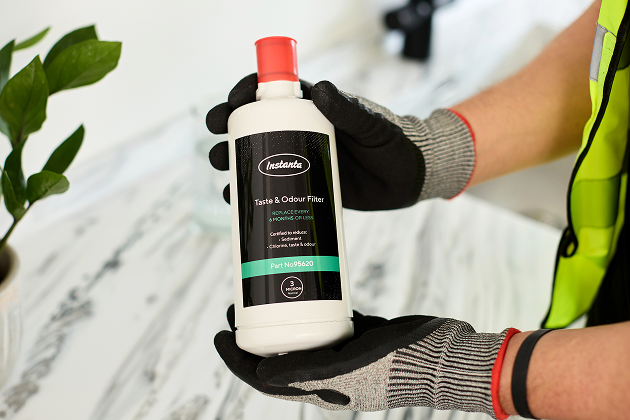
Chlorine is used during the water treatment process to help maintain a safe water supply. However, it can affect taste and smell, which may make people less likely to drink tap water throughout the day. As such, reducing chlorine taste and odour can help make workplace drinking water more appealing.
In some environments, such as healthcare settings, maintaining a residual level of chlorine is important to help control bacteria within the water system. For more information, explore our UltraCare package for healthcare and aged care settings.
2. Sediment
Sediment can include dirt, rust, suspended solids, and other physical particles. These may affect the appearance, clarity, and confidence people have in water. Sediment filters and mechanical filters are often used to reduce these particles before water reaches the point of use.
3. Lead
Lead can enter tap water through older pipework or plumbing materials. It's not usually something people can see, smell, or taste, which is why suitable certified filtration is important where lead is a concern. For older commercial buildings, in particular, it can be an important consideration when reviewing water quality.
4. Limescale
Limescale is common in hard water areas of the UK. It's caused by hard minerals, including calcium and magnesium, and can affect appliances, water systems, maintenance requirements, and sometimes water taste. It's not always a drinking water contaminant in the same way as other substances, but it can affect system performance over time, reducing product longevity.
5. Bacteria growth
Bacteria growth can be a concern where water is stored, stagnant, poorly maintained, or used in busy shared environments. Different filtration systems and treatment methods approach this contaminant in different ways, which is why regular maintenance and the right system specification matter.
6. Microplastics
Microplastics are tiny, microscopic plastic particles that can enter water sources through a wide range of environmental pathways. Because they're not removed by boiling tap water, advanced filtration can play an important role in reducing them from drinking water.
7. PFAS (forever chemicals)
PFAS are often called forever chemicals because they can persist in the environment. They have become a growing focus in conversations about water quality, including in commercial and workplace settings. As such, there's a growing demand for suitable certified water filters that can help reduce PFAS in drinking water.
8. Asbestos
Asbestos is most often associated with building materials, but asbestos fibres can also be a concern in some water infrastructure contexts. This is another example of a contaminant that may not be visible in the water, but can still be relevant to water quality planning.
The five main types of water filtration systems for workplaces
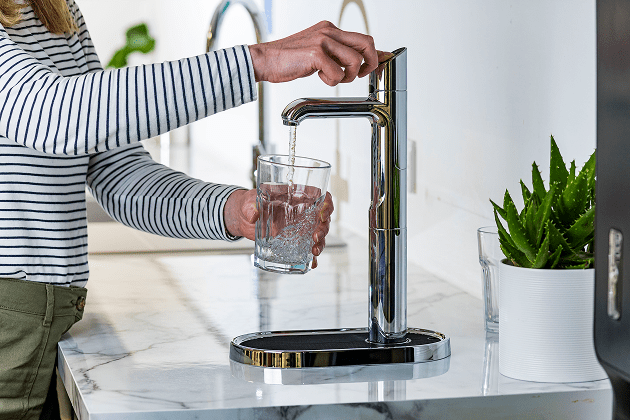
There are many different types of water filters, but not all are equally relevant to UK workplaces. For most commercial environments, the main types of water filtration to understand are mechanical or sediment filtration, activated carbon filtration, reverse osmosis, UV treatment, and advanced filtration systems.
Let's compare how they work and where they're most relevant, and then unpack them in more detail one by one:
|
Type of filtration method |
What it helps with |
Workplace relevance |
|
Mechanical/sediment filtration |
Reduces physical particles such as dirt, rust, sediment, and suspended solids |
Useful as a first stage in many water filter systems |
|
Activated carbon/carbon block filtration |
Helps improve taste and smell by reducing chlorine taste and odour |
Common in drinking water filters, under-sink systems, and filtered taps |
|
Reverse osmosis |
Uses a membrane to reduce a wide range of dissolved substances and specific contaminants |
Effective in some settings, but can also remove healthy minerals and may waste water |
|
UV treatment |
Uses ultraviolet light to help inactivate bacteria, viruses, and other microorganisms |
Useful as an added hygiene layer, particularly in healthcare settings, but does not remove chemicals, sediment, or heavy metals |
|
Advanced filtration systems |
Provide all-in-one filtration designed to reduce a broad range of harmful contaminants in a single system |
Best suited to busy workplaces that need a complete filtered water solution |
Mechanical and sediment filters
Often the first stage in a commercial water filtration system, mechanical filters use a physical barrier to reduce particles in water. Sediment filters work in a similar way, helping remove dirt, rust, grit, and other physical particles from tap water.
This filtration method is useful where water contains visible particles or where a system needs protection before further filtration takes place. However, mechanical filtration doesn't usually reduce taste, odour, dissolved substances, heavy metals, or bacteria on its own.
Activated carbon and carbon block filters
Activated carbon filters are commonly used in drinking water filters because they can help improve taste and smell. They work through adsorption, where certain substances are attracted to the surface of the carbon.
A carbon filter is particularly useful for reducing chlorine taste and odour, which is one of the most common reasons people dislike the taste of tap water. Carbon block filters use compressed activated carbon, which can support more controlled filtration in point-of-use systems, under-sink systems, and filtered water taps.

Reverse osmosis
Reverse osmosis is a more intensive water filtration method. A reverse osmosis system uses pressure to push water through a semi-permeable membrane, helping reduce a wide range of dissolved substances and specific contaminants.
Reverse osmosis filters can be effective in some settings, particularly where water needs more intensive treatment. However, it's not always the most practical or necessary option for every workplace.
Reverse osmosis can also remove naturally occurring healthy minerals, such as calcium and magnesium, and produce wastewater as part of the filtration process. For workplace drinking water, the aim shouldn't be to strip everything out but to reduce the contaminants you don't want, while retaining the minerals you do.
UV treatment
UV treatment uses ultraviolet light to help inactivate microorganisms in water, including bacteria and viruses. UV filters and UV treatment systems can provide an additional layer of reassurance in certain environments, particularly where water hygiene is a priority.
However, UV treatment isn't the same as filtration. UV light doesn't remove sediment, chemicals, heavy metals, taste, odour, or limescale. That's why UV should be part of a wider water treatment approach.
Take Zip UltraCare, for instance, which uses UV-C LED technology at the point of dispense to support water hygiene in healthcare or aged care settings that need an added layer of protection. Here, the UV treatment works alongside MicroPurity™ filtration, rather than alone, to provide comprehensive filtration.
Advanced filtration systems
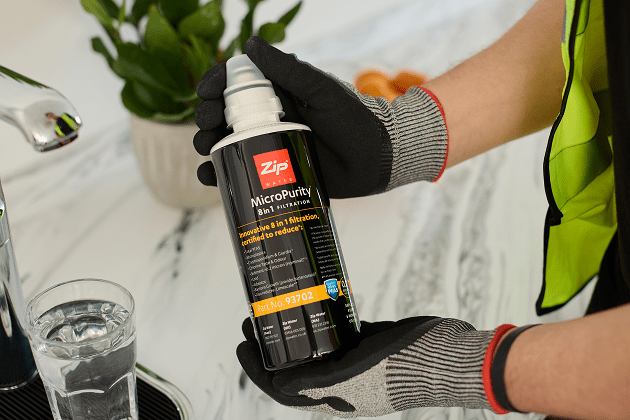
Advanced commercial water filtration systems bring together multiple water filters and market-leading filtration into a single solution. A key example of this approach is Zip’s 8-in-1 MicroPurity™ filtration, which is found within HydroTap, HydroChill, and other Zip Water systems – see how it works in the video below:
Rather than relying on a single filtration method, MicroPurity™ combines multiple stages of filtration in one compact cartridge, including fine particulate filtration, activated carbon to improve taste and reduce chlorine, and scale reduction to help protect internal components.
MicroPurity™ filtration is also independently certified to reduce the eight most harmful contaminants in drinking water, including PFAS, bacteria, microplastics, and others covered earlier, by up to 99.8%. In addition, unlike reverse osmosis systems, MicroPurity™ filtration retains healthy, beneficial minerals for better hydration, giving FMs greater confidence in the quality of the drinking water they provide across their buildings.
Which water filtration system should you choose?
For a workplace, the best water filtration system is usually the one that does more than solve a single issue. A basic carbon filter may help improve taste and smell; sediment filters may help reduce physical particles; reverse osmosis may be useful where intensive filtration is needed; UV treatment may support hygiene reassurance. But busy workplaces often need more than one benefit.
Before choosing a workplace filtration system, it is worth thinking about:
-
what you want the water filter to remove or reduce
-
whether the main issue is taste, smell, hard water, sediment or specific contaminants
-
how many people will use the system each day
-
whether you need boiling, chilled, sparkling or ambient filtered water
-
where the system will be installed
-
available space and water pressure
-
servicing, regular maintenance, and replacement filters
-
sustainability goals, including reducing bottled water use
-
the user experience you want to create
If there are specific concerns about water quality, older pipework, or hard water, it may also be worth testing tap water before selecting a filter. This can help you choose a system based on your workplace and its specific needs, rather than simply choosing the most familiar option.
Choosing the right filtration for your workplace with Zip Water
For most workplaces, the strongest choice is an advanced filtration system that has been independently certified to reduce harmful contaminants and deliver great-tasting drinking water.
Zip's HydroTap and HydroChill ranges help workplaces provide cleaner, better-tasting water in a way that's practical, reliable, and designed for commercial use. With MicroPurity™ filtration and HydroCare support, our dedicated service offering backed by the industry's largest support network, Zip can help businesses deliver a better workplace water experience from installation through to everyday use.
Explore Zip HydroTap filtration to see how MicroPurity™ works and click to get a tailored workplace quote to find the right filtered water solution for your business.
FAQs
What is the difference between water filtration and water purification?
Water filtration usually means reducing specific contaminants, impurities, particles, tastes, or odours through a filter, cartridge, or barrier. Water purification is used more broadly and can describe more intensive water treatment methods, such as reverse osmosis or UV treatment. Not every water filter purifies water, and not every purification method improves water taste.
How long do water filters last?
Water filters last for different amounts of time depending on the filter type, product, usage levels, local water quality, water pressure, and service requirements. In busy shared workplaces, regular servicing and replacement filters are important because filters can become less effective over time.
HydroCare can help support both Zip and non-Zip systems with planned filter changes, CO₂ changes, and ongoing servicing requirements.
Why is changing water filters important?
Changing water filters is important because filters become less effective over time. As water passes through the system, the filter captures or reduces the contaminants it's designed to target. When the filter is not replaced at the end of its lifecycle, water taste, system performance, hygiene, and overall reliability can all be affected.
Regular filter changes help keep filtered water tasting fresh, support good hygiene, and help the system perform. HydroCare makes this easier for businesses by supporting planned servicing, filter changes, CO₂ changes, and ongoing maintenance, helping systems continue operating at optimum performance.
What type of water filtration system is best?
For workplaces, the best option is often an advanced filtration system that combines effective filtration and reliable servicing – for instance, a Zip HydroTap backed by dedicated HydroCare servicing is one of the leading choices for busy workplaces.
What does a water filter remove from tap water?
What a water filter removes depends on the filtration method and the filter specification. A water filter may reduce chlorine taste and odour, sediment, lead, limescale, bacteria, microplastics, PFAS, asbestos, or other specific contaminants. Always check what a filter is designed and certified to reduce.
What are the different types of water filters for sinks?
Common sink-based water filters include under-sink systems, filtered drinking water taps, boiling water taps, chilled water taps, and reverse osmosis systems. For workplaces, point-of-use systems such as HydroTap are often more practical because they combine filtered water with the types of water people need throughout the day.
Does reverse osmosis remove healthy minerals?
Yes, reverse osmosis can remove naturally occurring minerals from water, including calcium and magnesium. This is one reason RO systems may not always be the best or most practical choice for workplace drinking water.
Do UV filters remove chemicals from water?
No. UV filters use ultraviolet light to help inactivate bacteria, viruses, and other microorganisms, but they don't remove chemicals, heavy metals, sediment, taste, odour, or limescale from water. This is why UV treatment is often used alongside other filtration methods, rather than as a complete filtration solution on its own.
Are ceramic filters or jug filters suitable for workplaces?
Ceramic filters and jug filters aren't usually a practical choice for busy workplaces. Filter jugs are better suited to low-volume domestic use. Ceramic water filters are more common in gravity-fed or specialist systems. That's why we always recommend an advanced filtration system like HydroTap.
What role does ion exchange play in water filtration?
Ion exchange is commonly used in water softener systems to help reduce hard minerals such as calcium and magnesium ions. This does help with softening water and reducing limescale build-up – but it's not the same as a complete drinking water filtration solution. In workplaces, limescale management is often one part of a wider water quality and maintenance strategy.